Ralph Cicerone Fellowship
ACOM Ralph Cicerone Fellowship in Earth System Science
Due to funding constraints, we are limiting our program to award one fellowship every other year. Our next application window will be from November 2026-January 2027 for the 2027-2028 Fellowship.
The Ralph Cicerone Fellowship is designed to promote and broaden participation in atmospheric chemistry and Earth system science through mentoring and training at NSF NCAR. Successful candidates receive financial support to visit NSF NCAR in Boulder, Colorado, for two months each year for two years to benefit from the training and guidance of ACOM scientists on tools and techniques that will support and enhance their graduate research. Students are encouraged to plan their first visit in the summer months if possible to take advantage of the many internship professional development workshops and activities available at NSF NCAR.
Qualifications:
Qualified graduate students will meet the following requirements:
- attending a North American university
- living in the U.S. with appropriate work authorization
- holding an undergraduate degree in chemistry, atmospheric science, or a related Earth system science, such as one of the other geosciences (chemistry, engineering, environmental science, mathematics, meteorology, or physics) and currently actively pursuing a graduate degree in atmospheric chemistry, atmospheric science, or a related Earth system science.
Background:
The Atmospheric Chemistry Observations & Modeling Laboratory (ACOM) at NSF NCAR is pleased to continue the Ralph Cicerone Fellowship in Earth system science. Dr. Cicerone was highly respected for both his research on atmospheric chemistry and for his influential leadership on related policy issues. He made important contributions to our understanding of the sources of greenhouse gases — particularly methane and nitrous oxide — and of the ozone layer and how human activities affect it. ACOM’s mission is to advance understanding and predictive capability of atmospheric composition and related processes, and to provide intellectual leadership and facility support to the wider community. This fellowship, in honor of Dr. Cicerone, provides an excellent opportunity to spend time working on a thesis, or final-project equivalent, with guidance from NSF NCAR scientists and engineers.
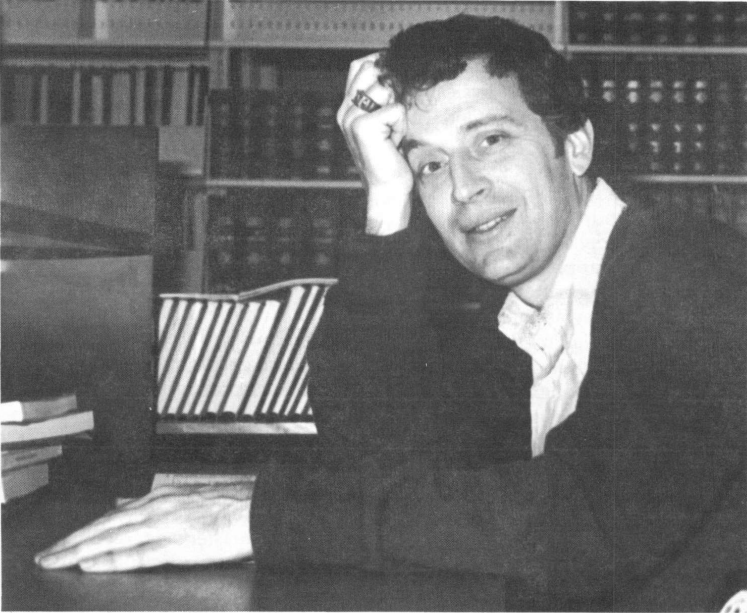
Dr. Cicerone received his bachelor's degree in electrical engineering from the Massachusetts Institute of Technology and his master's and doctoral degrees from the University of Illinois in electrical engineering, with a minor in physics. He held a variety of academic and research positions over the years, beginning with the University of Michigan before becoming a Research Chemist at the Scripps Institution of Oceanography at the University of California, San Diego. In 1980 he was a Senior Scientist and served as the director of the Atmospheric Chemistry Division (now the Atmospheric Chemistry Observations & Modeling [ACOM] laboratory) at the NSF National Center for Atmospheric Research in Boulder, Colorado until 1989. In 1989 he accepted an offer to build an interdisciplinary department of geosciences at the University of California, Irvine and was appointed the Daniel G. Aldrich Professor of Earth System Science at the University of California, Irvine. Dr. Cicerone served and chaired the Department of Earth System Science into the early 1990s before being appointed as dean of physical sciences for the next four years, and then Chancellor at the University of California, Irvine until becoming the President of the National Academy of Sciences in 2005. He retired in 2016 after serving the Academy for 11 years as its president.
In 2001, Dr. Cicerone led a US National Academy of Sciences study on the current state of Earth system change and its impact on the environment and human health, as requested by President George W. Bush. Four years later, Ralph became the President of the National Academy of Sciences. As President of the Academy, he was asked to give testimony to both the US Senate and House of Representatives and also fostered strong links with the Royal Society.
Dr. Cicerone’s research and policy contributions have been recognized with major awards. These include the Franklin Institute’s Bower Award for Achievement in Science in 1999, the 2002 American Geophysical Union Roger Revelle Medal, and the World Cultural Council’s Albert Einstein World Award of Science in 2004. Dr. Cicerone passed away in 2016.
How to Apply:
Please check back for our upcoming application window.